
DB6
Introduced at the London Motor Show in October 1965, the Aston Martin DB6 was a more spacious and higher-speed-stable development of the DB5. Its longer wheelbase, slightly raised roofline and Kamm-style rear treatment increased rear passenger room while improving aerodynamic behavior. The car retained Aston Martin’s 4.0-litre straight-six concept, but its mission was clearly that of a refined grand tourer rather than a stripped-back sports car. The styling remained closely related to the DB4 and DB5, although several details make the DB6 easier to recognize: separate bumper sections, a revised oil-cooler opening and a truncated tail with an integrated spoiler. Within the supplied ScanRacer context, the 1965 and 1966 entries cover the coupé and the open car listed as Volante.
What about the car you photographed?
Upload a photo to get a suggested make, model and likely year.
No account needed for the result · Publish only if you choose
Variants by year
Make: Aston Martin · Model: DB6
2 / 2 versions shown
1966

1965
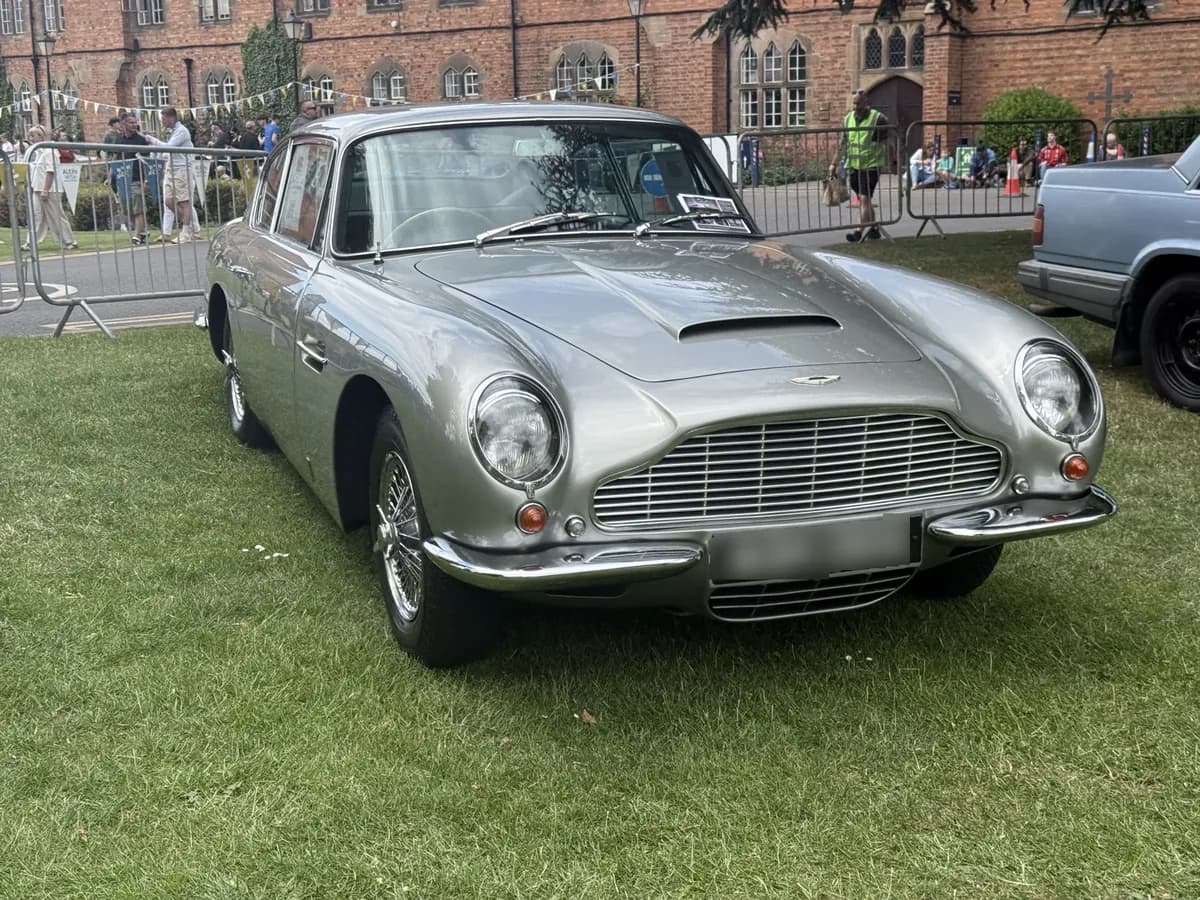
Aston Martin DB6 photos
Model summary
Data from the ScanRacer library, organized to compare versions quickly.
Model introduction
Introduced at the London Motor Show in October 1965, the Aston Martin DB6 was a more spacious and higher-speed-stable development of the DB5. Its longer wheelbase, slightly raised roofline and Kamm-style rear treatment increased rear passenger room while improving aerodynamic behavior. The car retained Aston Martin’s 4.0-litre straight-six concept, but its mission was clearly that of a refined grand tourer rather than a stripped-back sports car. The styling remained closely related to the DB4 and DB5, although several details make the DB6 easier to recognize: separate bumper sections, a revised oil-cooler opening and a truncated tail with an integrated spoiler. Within the supplied ScanRacer context, the 1965 and 1966 entries cover the coupé and the open car listed as Volante.
History
The DB6 addressed two practical shortcomings identified with the DB5. At high speed, the earlier car’s fastback shape could generate aerodynamic lift, while rear-seat accommodation was limited. Aston Martin therefore developed a longer body with a stretched wheelbase and a Kamm-inspired rear profile. The result was not a radical departure from the DB5, but a carefully targeted refinement of its grand-touring formula. The car was launched in October 1965. Its mechanical foundation remained Aston Martin’s Tadek Marek-designed 4.0-litre twin-cam straight-six, while revised suspension settings and additional equipment supported a more usable long-distance character. Depending on specification, buyers could choose a five-speed manual gearbox or an automatic transmission. Power steering, air conditioning and other touring-oriented features were also available, although equipment varied by year and market. Aston Martin later developed the DB6 Mk II during the model’s second phase. This version brought visible changes such as wider wheel arches, along with mechanical and equipment revisions. Production continued into the early 1970s, making the DB6 an important link between the Touring-bodied Aston Martins of the 1950s and 1960s and the more modern cars that followed. Its significance lies less in a complete technical revolution than in making the established DB4 and DB5 concept more stable, comfortable and practical.
Generations
The DB6 family is best understood as two main stages rather than as completely separate generations. The first is the original DB6, often called the Mk I by specialists. It appeared in 1965 with a four-seat fastback body, a longer wheelbase and a Kamm-style tail intended to reduce aerodynamic lift. Early cars remained visually close to the DB5, but the divided bumpers, revised rear profile and higher roofline gave the new model a distinct identity. The second stage was the DB6 Mk II, introduced later in the model’s career. It brought wider wheel arches designed to accommodate revised wheel and tyre arrangements, together with changes to trim, suspension and engine specification depending on the car. Fuel injection was available on some Mk II examples, but it should not be assumed to apply to every DB6 or every Mk II. The Volante name requires particular care. Aston Martin’s own history identifies the Short-Chassis Volante, built from October 1965 to October 1966, as using the final 37 DB5 chassis combined with several DB6 design cues. It should therefore not automatically be treated as a long-wheelbase DB6 Volante. Catalogues and advertisements sometimes simplify the terminology; chassis documentation, build date and identification numbers provide the more reliable way to establish the exact configuration.
Key differences
Compared with the DB5, the DB6 is primarily identified by its longer wheelbase and truncated Kamm-style tail. The rear profile is less fastback-like, with a small integrated spoiler intended to improve high-speed stability. Its bumpers are divided into separate sections rather than following the more continuous arrangement associated with the DB5. The DB6 also uses a revised front valance and oil-cooler opening, while its roofline is slightly higher. The cabin’s main practical improvement is the additional space available to rear passengers, reinforcing the coupé’s family-oriented grand-touring role. The basic mechanical layout remained closely related to the DB5, so the distinction is not simply a matter of greater engine output. Suspension tuning, available power assistance and comfort equipment were important parts of the evolution. To identify a DB6 Mk II, wider wheel arches are a useful visual clue, but they should be checked against the chassis number and factory specification. Some cars have been restored or modified, making appearance alone an unreliable final authority.
Photo recognition
When identifying a DB6, study the rear of the car before relying on trim details. The short Kamm-style tail, ending in a subtle integrated spoiler, is the strongest visual clue. The rear lamps sit in vertical clusters at the outer edges of the body, while the front and rear bumpers are divided into separate sections. In profile, the car appears more stretched than a DB5 because of its longer wheelbase. At the front, look for the revised opening in the lower valance, associated with oil cooling and the car’s equipment layout. The quarter windows and higher roofline help create a more spacious cabin. A DB6 Mk II may have visibly wider wheel arches, but that feature is not conclusive when a car has been restored, upgraded or converted. The Short-Chassis Volante requires special caution. A convertible built in 1965 or 1966 may combine a DB5 chassis with DB6 styling cues. Factory records, the chassis number and the mechanical specification are therefore more dependable than the name used in a sales advertisement. Visual identification can establish a likely model, but it cannot always establish the exact factory variant.
Important versions
The DB6 coupé is the core form of the range: a closed 2+2 body designed to provide more stability and rear-seat space than the DB5. Authenticated Vantage cars offer a sportier specification and tuning, but a badge or replacement engine alone should not be treated as proof of original Vantage specification. The Volante name needs careful interpretation. The 1965-1966 Short-Chassis Volante was based on the final DB5 chassis and incorporated DB6 styling elements. The long-wheelbase DB6 Volante belongs to a different stage of the model’s career. The DB6 Mk II represents the later development, with wider wheel arches and selected mechanical options, including fuel injection on a limited number of cars. Chassis records and factory documentation remain essential when determining the precise version.
References
- Aston Martin DB6Aston Martin
- DB6Aston Martin Media
- The Full English: Aston Martin DB6Hagerty UK
- 1969 Aston Martin DB6Tiriac Collection
- https://www.pugsleyandlewis.com/blog/differences-between-an-aston-martin-db6-a-db5pugsleyandlewis.com
- https://www.countrylife.co.uk/luxury/motoring/the-aston-martin-db6-is-better-than-the-db5-and-i-am-tired-of-pretending-that-it-isntcountrylife.co.uk
- https://www.wallpaper.com/transportation/lunaz-aston-martin-db6-restomodwallpaper.com
Frequently asked questions
- What years was the Aston Martin DB6 produced?
- ScanRacer's referenced versions cover 1965 - 1966.
- How many Aston Martin DB6 examples are documented on ScanRacer?
- 4 published scans from 4 members, with the latest photo added in August 2026.
What about the car you photographed?
Upload a photo to get a suggested make, model and likely year.
No account needed for the result · Publish only if you choose