
Introduction
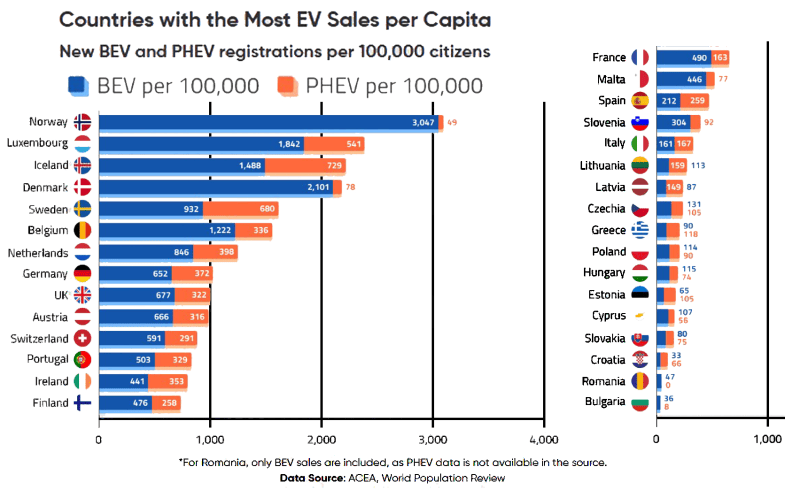
France stands out as one of the largest markets for electric vehicles (EVs) in Europe, yet the number of electric vehicles per capita remains relatively low compared to other countries. This paradox raises important questions about the future of electromobility in France.
A Growing Market
In recent years, the sale of electric vehicles has exploded in the French market. Traditional brands and new tech companies compete to offer interesting models at competitive prices. Government incentives and a growing awareness of environmental issues have also boosted this trend.
The numbers speak for themselves: according to the latest reports, electric vehicle sales in France have reached unprecedented highs, with record scores in certain quarters. This demonstrates substantial demand for electric vehicles, despite a low per capita adoption rate.
Adoption Challenges
One of the main challenges to widespread adoption of electric vehicles in France is the entry cost. Although battery prices have dropped, the initial cost of many electric models remains high. Many people are still hesitant to make the leap due to associated costs.
Moreover, the charging infrastructure, while continually improving, is not yet sufficiently developed to ensure a user experience comparable to that of gasoline vehicles. Concerns about the availability of charging stations, especially in rural areas, are a barrier to adoption.
Uneven Awareness
Another key factor contributing to this paradox is the level of awareness and education surrounding electric vehicles. In some areas, particularly urban ones, consumers are more exposed to the benefits of electric vehicles. Conversely, in other areas, especially in rural regions, awareness remains low.
Public awareness campaigns and education could transform the perception of electric vehicles by demonstrating not only their ecological benefits but also their long-term operating costs, which can be lower than those of traditional combustion vehicles.
Ecological and Economic Considerations
From an ecological standpoint, electric vehicles play a crucial role in reducing greenhouse gas emissions. However, the success of this transition depends on the production of renewable energy. France is distinguished by its nuclear energy production, but integrating renewable energies into the energy mix is essential to maximize ecological benefits.
Economically, developing an electromobility industry in France could create new jobs and stimulate innovation. Automakers must focus on research and development to improve range, charging speed, and reduce costs while maintaining product quality.
Conclusion
France is at a pivotal crossroads concerning the future of electromobility. While it has a solid market in volume, the low per capita adoption rate suggests that further efforts are needed to educate and encourage consumers. The key to successfully transitioning to sustainable mobility lies in developing robust infrastructure, appropriate subsidy programs, and ongoing consumer education.
Ultimately, the French paradox of electric cars highlights the importance of an integrated strategy to address the challenges of electromobility, aiming to position France as a leader in this technological revolution.
Source: Original article